Title here
Summary here
A review of current AI Engineer job listings shows why production software, cloud, evaluation, RAG, and agent skills matter more than isolated model knowledge.

A few months ago, becoming an AI Engineer could sound almost straightforward.
Learn Python. Connect an application to an LLM. Build a chatbot. Add a vector database. Put the project on GitHub.
That is still a useful starting point. But it is no longer a complete career plan.
When I look at current AI Engineer job descriptions, I see companies asking for something broader: engineers who can turn uncertain AI behaviour into reliable software. They want people who understand models, but they also want APIs, cloud platforms, databases, containers, testing, security, monitoring, evaluation, and cost control.
In a cleaned sample of 21 distinct U.S. AI Engineer role profiles from 16 employers, cloud-related skills appeared in 85.7% of the roles. Python appeared in 76.2%, large language models in 71.4%, AI agents in 61.9%, and RAG in 42.9%.
The practical answer is therefore:
To become an AI Engineer, learn how to build production software first, then learn how to place LLMs, retrieval systems, and agents inside that software safely and reliably.
This article explains what that means, what employers are asking for, and what you should learn next.
AI Engineers need five connected skill groups: Python and backend development, cloud and deployment, LLM and RAG development, agent engineering, and evaluation and observability. Python is the starting point, but employers usually want evidence that you can turn an AI feature into tested, secure, monitored software that works outside a notebook.
An AI Engineer builds software products and systems that use artificial intelligence.
That may include:
The role sits somewhere between software engineering, machine learning, data engineering, and cloud engineering.
The balance changes from one company to another.
At a startup, an AI Engineer may build an entire product from the user interface to the retrieval pipeline. At a bank, the same title may focus on governance, reliability, evaluation, and enterprise integration. At a hardware company, it may mean building infrastructure for large-scale AI clusters.
This is the first thing I tell people who ask me how to prepare for AI Engineer jobs:
Do not prepare for the title alone. Prepare for the type of AI engineering work you want to do.
The original dataset contained 63 active U.S. listings classified as AI Engineer roles. However, several listings represented the same role published separately across many cities.
After removing obvious location duplicates, one internal test vacancy, and one geographical mismatch, I retained 21 distinct role profiles from 16 employers.
The most frequently detected capabilities were:
| Skill or capability | Roles mentioning it | Share of cleaned sample |
|---|---|---|
| Cloud-related skills | 18 | 85.7% |
| Python | 16 | 76.2% |
| Large language models | 15 | 71.4% |
| AI agents | 13 | 61.9% |
| AWS | 11 | 52.4% |
| RAG | 9 | 42.9% |
| Google Cloud | 7 | 33.3% |
| Azure | 6 | 28.6% |
| Docker | 5 | 23.8% |
| Distributed computing | 5 | 23.8% |
| Machine learning | 4 | 19.0% |
| SQL | 4 | 19.0% |
These numbers describe this selected dataset. They should not be treated as a complete measurement of the entire U.S. job market.
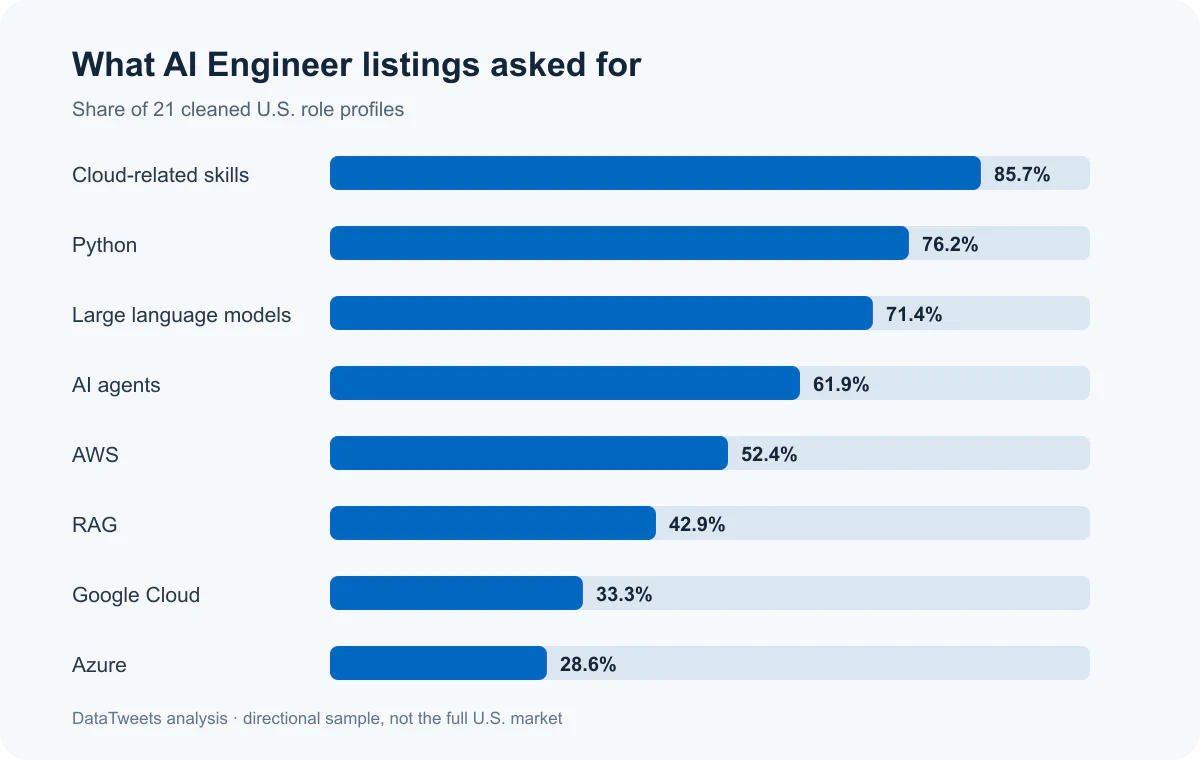
Figure 1. The eight most frequently detected capabilities in the cleaned sample. Download the aggregate counts as CSV.
These advertisements were active when I reviewed them on July 25, 2026. Job pages can close or move, so each card records the employer, role, location, requested capabilities, and the specific point the ad supports.
Requested: Python or another production language; cloud AI; LLM inference; similarity search; guardrails; evaluation and observability
What it shows: Platform roles combine model work with deployment, governance, cost, latency, and production support.
View the original job adRequested: Python and FastAPI; agent frameworks; RAG; MCP; evaluation; prompt-injection defenses; Docker and Kubernetes
What it shows: Enterprise AI engineering expects full-stack delivery, automated evaluation, security, and production operations.
View the original job adRequested: CPU and GPU compute; high-performance storage; networking; low-latency inference; observability; governance
What it shows: At infrastructure depth, AI engineering includes hardware selection, capacity, resilience, and platform standards.
View the original job adRequested: Python; RAG pipelines; AWS and Bedrock; evaluation; tracing; guardrails; CI/CD; cost and performance
What it shows: AI operations means owning the route from prototype to a monitored, reversible, and economical service.
View the original job adRequested: Local model serving; permission-aware RAG; evaluation datasets; observability; safe tool use; Docker and Kubernetes
What it shows: Private AI platforms add access control, model serving, security, and lifecycle work to the usual RAG stack.
View the original job adStill, they reveal a useful pattern: employers are not separating AI from software and infrastructure. The two are becoming part of the same role.
No. But Python is still the best language to start with.
Python appeared in 16 of the 21 cleaned job profiles. It remains the most common language across AI application development, machine learning, RAG, agent frameworks, evaluation tools, data processing, and model APIs.
However, employers were rarely asking for Python in isolation.
They also wanted candidates who could use Python to:
Some companies also expected engineers to work with existing enterprise technology such as Java, Go, C++, C#, .NET, JavaScript, or TypeScript.
One role combined agentic AI with a C# and .NET backend, SQL Server, Docker, and Jenkins. Another accepted Python, Go, Scala, or Java for a senior AI platform position. A distinguished-level position required Python plus another production language.
My advice is simple:
Do not study Python only as a language for notebooks. Study it as a language for building and operating software.
You should be comfortable creating modules, APIs, tests, database connections, background tasks, configuration files, logging, and error-handling logic. The free Python course builds the language foundation, while Your First API with FastAPI shows how that Python knowledge becomes a working service.
Yes. In this sample, cloud-related skills appeared more frequently than any specific model, framework, or AI technique.
At least one cloud-related capability appeared in 18 of the 21 cleaned role profiles.
AWS was the most frequently named platform, followed by Google Cloud and Azure. Employers also mentioned services and environments such as:
This does not mean you need expert-level knowledge of all three major cloud providers.
Choose one platform and learn it well enough to deploy a complete application.
For example, you should know how to:
The Docker and Kubernetes course is a useful next step because it moves beyond local notebooks into reproducible containers, configuration, storage, and deployment.
At the more advanced end of the market, cloud knowledge can become infrastructure engineering.
A Mastercard AI platform role covered GPU compute, high-performance storage, networking, cooling, power density, procurement, lifecycle management, governance, and low-latency inference.
You do not need that depth for your first AI application. But it shows how broad the AI Engineer title has become.
Yes, at least in this sample.
AI-agent skills appeared in 13 of the 21 cleaned role profiles, or 61.9%.
The important point is that employers were not only asking for simple autonomous chatbots.
They mentioned capabilities such as:
EchoStar advertised junior, senior, and lead Agentic AI Engineer roles.
Its junior position asked for Python, exposure to FastAPI, cloud infrastructure, Docker, LLM systems, and familiarity with multi-agent frameworks. It required one to two years of software-development or data-science experience.
The lead role expected eight years of software-development experience and experience taking LLM-powered systems into production. It also mentioned LangGraph, CrewAI, AutoGen, MCP, and A2A protocols.
This difference matters.
A framework can help you build an agent. It cannot decide:
Those are engineering decisions.
To see the engineering behind the word agent, start with The Agent Loop. Then build the safe Python agent loop tutorial, which adds limits, validation, and traces instead of assuming the agent will always behave correctly.
Yes.
RAG appeared in nine of the 21 cleaned role profiles, or 42.9%.
But the expected level is changing.
A beginner RAG tutorial may show how to split documents, create embeddings, save them in a vector database, retrieve a few passages, and send them to an LLM.
That is useful for learning the architecture. The Building a RAG Pipeline lesson provides that foundation.
Employers, however, increasingly discuss:
One BeaconFire role described end-to-end responsibility for ingestion, retrieval, agent orchestration, evaluation, deployment, APIs, monitoring, security, and cost optimization.
Therefore, RAG is still worth learning, but your portfolio project should go beyond connecting a vector database to an LLM.
A stronger project explains:
Two practical tutorials take the next step: compare RAG chunk sizes with retrieval tests and evaluate RAG answers without an LLM judge. Together, they turn “I built RAG” into evidence that retrieval and answers were tested.
It depends on the role.
Traditional machine-learning skills appeared explicitly in fewer listings than Python, cloud, LLMs, agents, or RAG.
That does not mean machine learning is unimportant. It means the AI Engineer title now covers several types of work.
Some roles focus on integrating existing models into software. Others involve model training, fine-tuning, inference optimization, multimodal systems, or large-scale machine-learning infrastructure.
GE HealthCare, for example, wanted experience with foundation models, transfer learning, optimization, model evaluation, PyTorch, distributed AI systems, model serving, and production inference.
For applied AI application roles, you may not need to derive every machine-learning algorithm mathematically. But you should understand:
You need enough knowledge to understand what the model is doing and when it may fail.
Many learners spend most of their time building the first version of an application.
Employers are increasingly interested in what happens after that.
Several roles in the dataset discussed:
Capital One included model evaluation, experimentation, governance, guardrails, and observability among the responsibilities of a senior AI platform role.
Palo Alto Networks wanted evaluation harnesses that measured accuracy, latency, and cost.
TCP described deterministic fallback behaviour, confidence scoring, timeouts, undo windows, retries, audit logs, evaluation suites, and trust metrics.
When I advise people building AI portfolios, I now ask:
How do you know your system is good?
“Because the demo worked” is no longer a strong answer.
A better answer includes a small evaluation dataset, measurable criteria, known failure cases, and evidence of improvement.
The LLM Evaluation and Observability course covers this work as a full engineering discipline. For a smaller portfolio exercise, test an LLM pipeline without making API calls so the test suite stays fast, repeatable, and inexpensive.
Usually, not directly.
The automatic experience labels in the raw dataset were not reliable enough to use without manual review. One distinguished-level role requiring more than ten years of experience was incorrectly labelled entry level.
After reading the job descriptions, the sample appeared strongly weighted toward experienced candidates.
Several roles asked for five, six, eight, ten, or twelve years of experience. Many companies wanted candidates who had already worked in software engineering, platform engineering, machine learning, cloud engineering, data science, or data engineering.
There were genuine junior opportunities. EchoStar’s junior Agentic AI Engineer position required one to two years of experience. But even that role expected Python, LLM familiarity, backend exposure, Docker, cloud knowledge, and software-engineering foundations.
For most beginners, the more realistic path is:
AI Engineering may be your target role, even when it is not your first job title.
Not every AI Engineer performs the same work.
Builds applications with LLMs, RAG, tools, APIs, and agents.
This is the most accessible path for strong Python and backend developers.
Builds shared services, infrastructure, deployment systems, model gateways, observability, and internal AI platforms.
This path requires stronger cloud, DevOps, distributed-systems, and platform knowledge.
Works closer to GPU systems, networking, storage, inference infrastructure, high-performance computing, and model-serving performance.
Builds agents, orchestration systems, tool integrations, state management, approval flows, and reliable action execution.
Works directly with customers or business teams, understands their workflows, prototypes solutions quickly, and turns successful experiments into production systems.
Combines AI with business workflows, enterprise applications, RPA, Power Platform, process mining, and document processing.
Understanding these differences will help you avoid learning every tool without a clear direction.
I recommend a seven-layer learning path.
Learn:
Learn:
Learn:
Learn:
Learn:
Learn:
Learn:
You do not need to master all seven layers before applying for a job.
You do need enough breadth to build one complete system and explain your decisions.
If you need a structured starting point, the free Data and AI career paths connect these foundations to ordered courses and practical projects.
Do not build five nearly identical chatbots.
Build one system that shows engineering depth.
For example, create an enterprise knowledge assistant that:
Then explain:
That explanation may be more valuable to an employer than adding another framework to the project.
If the portfolio project needs a clear finish line, use the FastAPI test-and-deploy capstone as a guide for packaging, testing, and deploying the service rather than stopping at a local demo.
You do not need to chase every new library.
Frameworks will continue to change. Job titles will also change.
The more durable skills are:
The current market is moving from AI demonstrations toward AI operations.
A demonstration asks:
Can the model do this task?
A production AI Engineer asks:
Can the complete system do it repeatedly, safely, measurably, and at an acceptable cost?
That is the difference between connecting to an LLM and becoming an AI Engineer.
I reviewed a source export containing 63 active records classified as U.S. AI Engineer roles. The export was generated on July 25, 2026.
I cleaned the records before calculating the percentages in this article.
The same Deloitte role appeared 37 times for different locations.
One listing explicitly identified itself as an Indeed internal test job rather than a real vacancy.
Another record was classified as a U.S. listing although its description named Romania, Serbia, Ukraine, Belarus, Georgia, and Moldova as its actual locations.
After removing obvious location duplicates and problematic records, I calculated the results from 21 distinct employer-title role profiles across 16 employers. The downloadable file contains the aggregate counts used in the table and chart, rather than employer-level listing text.
The results are directional rather than a complete representation of the U.S. labour market. Skill extraction was rule-based, employer terminology varied, and some important concepts—such as evaluation and observability—were easier to identify through manual reading than through the extracted skill labels.